
High-quality IV devices are important in healthcare settings because they reduce infection risk and ensure accurate fluid and drug delivery. Durable catheters and pumps reduce complication rates and decrease repeat procedures, thus reducing the time and resources spent. Precision flow and transparent alarms enhance dosing accuracy for chemotherapy, antibiotics, and fluids. Rugged components and quick-clean designs bolster safe treatment in wards and clinics. Reliable operation helps clinicians make quicker decisions and spares patients the pain of line failures. Hospitals that deploy premium IV devices observe reduced complications and abbreviated lengths of stay, which leads to better outcomes and lower costs. The body dives into device features, how to choose them, and hands-on maintenance tips for clinical teams.
Key Takeaways
- High-quality IV devices matter because they directly improve patient safety and clinical outcomes by minimizing infections, dosing errors, and device-related injuries.
- Dependable, ergonomic IV devices enhance caregiver confidence and efficiency. They shift clinical staff time from fixing to caring and drive faster patient throughput.
- When you invest in better materials, precision manufacturing, and clinical design, your return comes in the form of reduced complications, lower total cost of ownership, and enhanced accreditation performance.
- Proactive maintenance, standardized device selection, and targeted staff training avoid the most frequent failures: catheter occlusions, infusion errors, and connection leaks.
- Smart pumps, closed systems, and antimicrobial features facilitate infection control and enable more effective monitoring and faster response to adverse events.
- Structure procurement around lifecycle costs, supplier transparency, and frontline feedback to combine upfront investment with sustained clinical and economic value.
The Crucial Role Of High-Quality IV Devices

Superior IV devices deliver a reliable, consistent way to administer fluids and medications directly into a patient’s bloodstream. Their quality and functionality influence virtually every clinical decision related to intravenous therapy. Trustworthy devices minimize the risks of infection, dosing errors, and mechanical complications while allowing clinicians to track and optimize treatment with confidence. Here are targeted areas where device quality alters outcomes, workflows, and staff behavior.
1. Patient Safety
Innovative device components decrease contamination and infection risk by facilitating closed systems and antimicrobial materials. Single-use components and easily sterilized parts minimize cross-contamination between patients. Precision meters, well-calibrated flow regulators, and IV poles that position the bag height just right all help ensure accurate delivery rates and reduce the risk of underdosing or overdosing. Superior seals and tamper-evident ports decrease inadvertent or nefarious access, and shapes that reduce sharp edges or unstable fittings lessen injuries such as phlebitis or infiltration. With clear labeling and easy connectors, patients and staff discussing line care means patients get involved in keeping lines complication-free.
2. Clinical Outcomes
Thanks to precise, stable infusion, patients recover faster because drug levels stay closer to the therapeutic window. The fewer device malfunctions, the fewer adverse events related to interrupted delivery, like missed antibiotics or inconsistent chemotherapy doses. Reliable administration allows physicians to rely on therapeutic plans and adjust them in real time, based on vital signs and lab results. Integrated monitoring features that record flow and alarms assist clinicians in optimizing therapy and recording modifications for audits and care plans.
3. Caregiver Confidence
Reliable, intuitive IV equipment boosts nurse morale as well. Less surprise beeping and emergency repairs allow nurses to concentrate on patient care. When teams trust devices, they’re less anxious during high-stakes procedures and less prone to pause interventions to troubleshoot. Procurement decisions supported by reliability data help build confidence between nursing and pharmacy. Enhanced device training and clear protocols further empower staff.
4. Workflow Efficiency
Intuitive interfaces reduce setup and maintenance time. Standardized product lines make inventory easier and cut down on search time during handoffs. Fewer failures mean fewer interruptions and reduced downtime in busy wards, allowing for quicker patient throughput. Stable devices cut down on alarm fatigue and keep focus on real clinical issues.
5. Infection Control
Antimicrobial materials and closed systems limit pathogen exposure. Disposable components and transparent sterilization routes minimize contamination. Robust IV equipment hygiene protocols and product designs promote protocol adherence and reduce nosocomial infection incidence, cutting expenses and enhancing results.
What Defines A Superior IV Device?

A superior IV device must reliably deliver fluids, drugs, or nutrients while reducing risk and easing clinical work. Here’s what makes a great IV device, in terms of technical and practical features that distinguish solid devices from borderline ones, along with a brand/model comparison chart.
Material Science
Materials need to be biocompatible and non-reactive to reduce allergic reactions and tissue irritation. Polyurethane and medical-grade silicone frequently fulfill these requirements. They don’t crack, kink, or chemically degrade in the presence of common IV solutions. Clear tubing and chambers allow healthcare workers to detect air, turbidity, or backflow of blood immediately, facilitating swift troubleshooting and reducing infiltration and hidden thrombi complications.
Design should be thoughtful of environmental cost. Recyclable polymers and thinner multilayer laminates slash waste without sacrificing sterility. Select materials with proven resistance to corrosion from saline, parenteral nutrition, and typical antibiotics to maximize usable life and maintain sterile seals.
A superior IV device should offer secure, easy-to-use bag-hang options so gravity and pump settings result in precise dosing and reduce dosing errors related to improper height.
Design Ergonomics
Ergonomic design minimizes user error and accelerates routine care. Comfortable grips, clear tactile indicators, and one-handed clamps allow nurses to manipulate lines while cradling a patient or charts. Color coding and bold, permanent labels identify the lumen’s purpose and flow direction, reducing setup errors between shifts and staff.
We all know what can happen if an IV device becomes disconnected. Safety features like air-elimination chambers, backflow valves, and anti-siphon mechanisms prevent air embolism and limit infection risk. Devices should be simple to clean and constructed for regular examination so servicing is simple and obvious.
Manufacturing Precision
- Incoming raw material inspection with lot testing and bioburden assays.
- In-line dimensional checks and leak testing occur at every production stage.
- Functional flow-rate and pressure testing on representative samples.
- Sterilization validation and post-sterilization integrity checks.
- Final visual inspection and batch traceability tagging.
Automation improves repeatability. Advanced test rigs simulate real-world infusion rates and temperatures to ensure consistency. Full traceability enables rapid recalls. Clear documentation of manufacturing standards, ISO certification, and regulatory approvals demonstrates compliance and gives purchasing teams the data needed for risk assessment and procurement decisions.
Brand/Model | Material | Safety Features | Ergonomics | Certifications |
Merit Pharmaceutical IV Pump | Polyurethane | Air sensor, anti-siphon | One-hand clamp, color code | ISO 13485, CE |
Merit Pharmaceutical IV Set | Silicone | Backflow valve, filter | Transparent chamber, labeled | FDA 510(k), ISO |
Merit Pharmaceutical IV Stand | Stainless + polymer | Secure hook, height lock | Quick-release grip | CE, ISO 9001 |
The Hidden Economics Of IV Therapy
IV therapy costs and outcomes are connected by device selection, care setting, and patient mix. A transparent line of sight to total cost of ownership (TCO) enables clinical leaders to select devices that reduce long-term spend and safeguard patients and staff.
- Initial purchase price per unit (USD)
- Service life (years) MTBF
- Consumable cost per patient (tubing, catheters, antiseptics)
- Training hours and staff labor cost per insertion
- Rates of complications such as phlebitis, infiltration, and infection, along with the cost per event.
- Readmission likelihood and average payer cost avoided
- Downtime impact on throughput and elective procedure delays
- Warranty, on-site service fees, and parts replacement costs
- Patient population (older patients with smaller veins add time to insertion)
- Transition to home care opportunity and payer savings, with reports indicating savings of as much as 52%.
Initial Investment
Higher upfront cost can be offset by fewer complications, quicker insertions for hard veins, and lower consumable consumption. For instance, a premium infusion pump with better occlusion detection may cost 20 to 40 percent more, but it can halve infiltration events, which reduces average complication cost per event and shortens hospital stay. Budget constraints lead to compromise. Prioritize patient safety in surgical and geriatric wards where elderly patients require advanced device capabilities. Bulk buying lowers unit cost. Work with your vendors for service credits and volume discounts. Review warranties closely. Include battery, calibration, and software updates to avoid surprise service fees.
Clinical Longevity
Compare device lifetimes to replacement cycles and software obsolescence. A five-year device with few parts swaps can be more affordable than a $500 model you replace every year. Include training: initial teach time and periodic refreshers cost staff hours. Devices with intuitive UIs cut training by measurable percentages. Fewer mistakes mean less legal exposure and insurance claims. Multiply the historical error cost per claim by the expected reduction. Track patient satisfaction: reliable IV therapy reduces delays and discomfort, improving retention for outpatient clinics and home infusion services. Homecare shift can cut payer costs up to 52%, so safe home-use devices deliver strategic savings. Consider variability: some treatments take 30 to 120 minutes. Device reliability during long infusions matters. Consider rare but severe and expensive adverse reactions, even with low frequency.
Mitigating Common Device Failures
We can mitigate common device failures in IV therapy that stem from material degradation, improper reprocessing, human error, connector fatigue, pump software faults, and delayed reporting of incidents. Medical device events are usually the result of reprocessing or latent defects that surface years later. A focused list of frequent causes follows:
- catheter occlusion from thrombus or precipitation
- insertion trauma and poor aseptic technique
- pump programming errors and battery or sensor faults
- loose or damaged luer connections and tubing cracks
- Poor cleaning or reuse leading to contamination
- delayed or absent incident reporting and feedback loops
Catheter Issues
Newer catheter polymers and heparin-bonded or hydrophilic coatings reduce the risk of occlusion, which is often the result of protein adhesion and thrombosis. If materials fail, the result may be partial or complete blockage, interfering with therapy. Change catheters as soon as resistance to flow appears. Training modules comprising hands-on simulation, video review of insertion angles, and competency checks reduce insertion errors. Staff knowledge and experience strongly influence the identification of complications. Smart sensors that sense early phlebitis or infiltration by local temperature, impedance, or pressure changes allow problems to surface before visible signs, especially in low verbal patients. It’s critical to replace faulty catheters quickly to prevent the situation from escalating. Failure mode documentation helps with both purchasing decisions and safety tracking over time.
Infusion Errors
Smart infusion pumps with dose-error reduction software and automatic alerts flag out-of-range settings and incompatible combinations to decrease dosage errors. Double-checks remain critical: two-person verification of programming, independent cross-check with the prescription, and pre-infusion checklists cut human slips. Set defined, unit-level protocols for alarm responses so staff behaves predictably in a crisis. Protocols should define immediate steps, escalation paths, and who documents actions. Regular infusion record audits reveal patterns. Repeated misprogramming associated with a particular device model or training deficiency enables targeted remediation. Audit results inform incident reporting, but reporting is inhibited by fear of reprisal, not knowing what to report, and time pressures. Hence, cultural and process shifts are required for better capture.
Connection Leaks
Choose connectors and luer locks that feature proven leak-resistant performance and facility-wide standardized fittings to minimize incompatibility. To minimize common device failures, check all connections prior to and during use for cracks, discoloration, or a loose fit. A simple flex-and-press test uncovers many problems. Swap out worn tubing and adapters on a schedule, not when they give out and actually become visible. Inventory control has to keep service life records. Document and report all leaks to the hospital safety office. Reporting supports national surveillance systems and regulatory actions, like those advanced under Vanessa’s Law, and prevents similar failures in other institutions.
The Human Factor In IV Management
The human element, behavior, technical skill, and communication define how IV devices actually operate in real-world scenarios. Staff proficiency influences device configuration, dosing precision, and issue troubleshooting. Pump usability issues or even ambiguous pump interface labeling can transform minor lapses into patient injury. Bringing HFE into the procurement and design process helps reduce cognitive load, clarify interfaces, and promote safer use in hospitals and homes.
Clinical Education
Create an onboarding checklist that covers device basics, safety checks, alarm response, priming steps, flushing technique, and documentation practices. Include timelines for supervised first uses and sign-off criteria for competency. Offer refresher courses that mix short lectures with hands-on simulation. Practice handling occlusions, programming rate changes, and responding to common alarm patterns. Simulations should include time pressure scenarios to mirror clinical reality and build muscle memory. Use formal competency assessments and daily checklists to verify proficiency. Assess both knowledge and observed performance, and keep records linked to personnel files. Keep training materials current by reviewing them quarterly and after device firmware updates. Include clear, image-rich guides plus quick-reference cards for ward use.
Technique
Have standardized insertion, connection, and maintenance steps across units to reduce variation. One detailed, well-documented protocol reduces errors and makes audits easier. Aseptic technique and hand hygiene must be explicit checkpoints in every protocol. Incorporate direct observation in audits and corrective coaching when lapses occur. Teach priming and flushing steps, along with exact volumes, sequence, and why. This prevents air emboli and drug interactions when lines are shared. Track compliance with audits and peer review. Leverage HFE-compatible measures like task completion time, error categories, and near-miss reports to refine processes.
Trust
Gain confidence through transparent supplier relationships that bring usability testing, error logs, and HFE reports to the surface. Buyers should insist on human-centered proof before buying. Present case studies demonstrating enhanced safety from moving to user-friendly devices, with examples from both the hospital and home-care settings, so staff feel a wide applicability. Promote no-blame reporting of device issues and close calls. Frontline input must inform purchasing specifications and vendor conversations. Match buying policy with staff feedback, add home-care needs such as phone and online support, and make sure the labeling and instructions are clear for nonclinical users.
The Next Generation Of Intravenous Solutions
The future of IV care will integrate hardware, software, and process innovation to revolutionize IV therapy, making it safer, more convenient, and patient-centric. The research aims to increase safety, reduce waste, and optimize nursing workflows. These new tools, already in trials, demonstrate how much room there is to grow in IV management technologies.
Anticipate Integration of Digital Monitoring and Wireless Connectivity
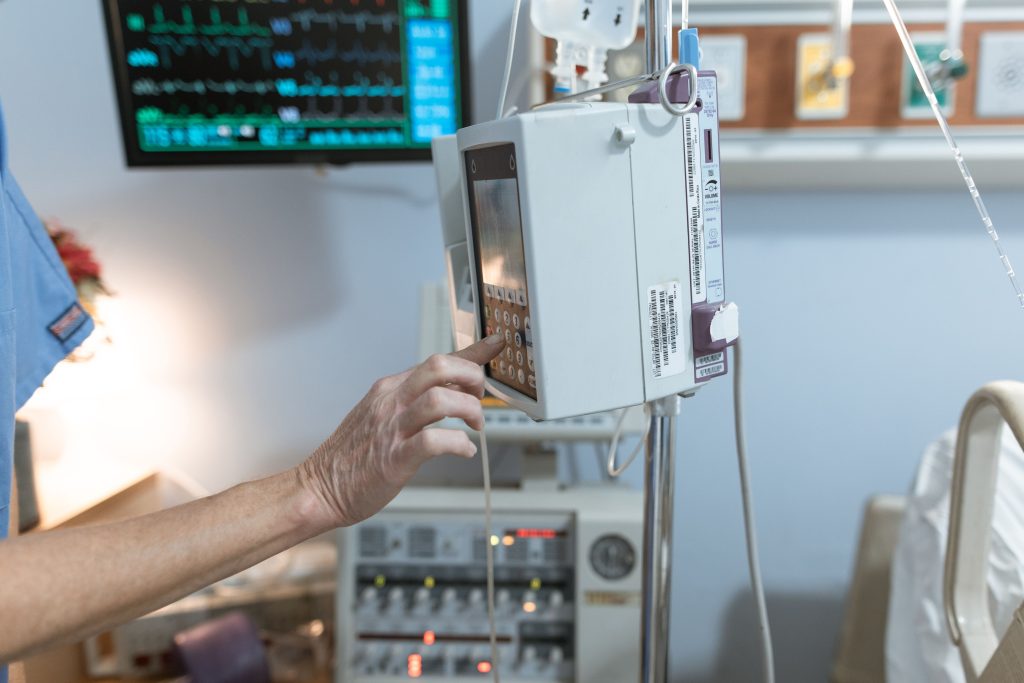
Smart pumps, barcode scanners, and dose-error reduction software connect medication orders, drug libraries, and pump settings to prevent errors before they get to the patient. Data demonstrate that smart pumps reduce infusions with errors from 76 to 25, and when you add medication error-prevention software, that falls to 6, which is a near 80% decrease. In an adult ICU, integrating pumps with a medication library and DERS could potentially intercept as many as 1,136 errors and prevent approximately 300 adverse events over two years. Wireless connectivity allows them to send alerts and logs to central dashboards, so clinicians can spot trends and intervene before a line breaks or dose drifts.
Explore Advances in Miniaturization and Wearable Infusion Devices
Smaller, lighter pumps and wearable infusers shift IV therapy from bedside poles to more mobile care. Miniaturized devices enable step-down care at home, early mobility in hospitals, and outpatient infusion clinics. Wearables minimize tube length and trip hazard and liberate nursing hours. Multi-lumen tubing in the works may reduce line clutter by merging channels into a single, neat system, minimizing misconnection hazards and easing medication swaps.
Track Regulatory Trends Shaping Next-Generation IV Product Development
Regulators are closing the noose on connectivity, security, and human factors engineering. Devices have to demonstrate safe interaction with hospital systems, transparent user interfaces, and resilient data logs. Approval pathways now anticipate clinical proof of risk mitigation, not simply bench performance. This pushes R&D towards real-world trials and post-market surveillance, which increases upfront costs and enhances long-term safety.
Prepare For Personalized Medicine Applications Requiring Precise Infusion Control
Precision dosing will increasingly matter as therapies become targeted and variable by weight, genetics, and organ function. Pumps will require high-resolution flow control, closed-loop feedback, and integration with EHRs to tune rates automatically. Vein finders and non-invasive imaging will guide line placement right the first time, decreasing failed sticks and complication rates. All of these shifts collectively hold the promise of improved outcomes and more efficient nursing care.
Conclusion
Why high-quality IV devices matter. They provide consistent flow, reduce leaks, and allow for transparent dosing. Nurses spend less time fixing lines. Patients are safer and heal more quickly. Hospitals experience fewer infections and readmissions. Good IV devices are worth it.
Solutions have resonance. Trade leaky hubs for sealed connectors. Include basic visual inspections during rounds. Run short drills on flush and secure steps. Record device problems by month and see if you can detect a pattern.
Why do high-quality IV devices matter for care, cost, and staff load? Try one small tweak this week. Swap out one part, add one inspection, or conduct one quick skill refresher and see the returns multiply.
Frequently Asked Questions
1. What Are The Main Benefits Of Using High-Quality IV Devices In Healthcare?
Top-notch IV devices minimize infection chances, ensure precise medication delivery, decrease complications, and maximize patient comfort. They save clinicians’ time and decrease overall care costs.
2. How Do Superior IV Devices Improve Patient Safety?
They provide dependable flow control, secure connections, and superior materials that prevent contamination and mechanical breakdown. This reduces infiltration, extravasation, and bloodstream infections.
3. What Features Define A Superior IV Device?
Things to look for include biocompatible material, clear flow indicators, secure locking mechanisms, anti-reflux valves, and infusion pump and monitoring system compatibility.
4. How Do Better IV Devices Affect Hospital Costs?
They save money by avoiding complications, repeated sticks, infection treatment, and extended hospital stays. Upfront device quality frequently produces net savings.
5. What Are Common IV Device Failures and How Are They Prevented?
Typical failures are dislodgement, occlusion, and leakage. Prevention needs strong design, safe fixation, regular observation, and personnel education.
6. How Important Is Clinician Training For IV Device Outcomes?
Very critical. Even the highest quality devices aren’t going to work if they’re not inserted the right way, maintained, and monitored. Active learning enhances success rates and patient outcomes.
7. What Innovations Are Shaping The Future Of IV Technology?
Smart sensors, closed-system designs, antimicrobial coatings, and better materials boost safety, monitoring, and ease of use. These innovations seek to minimize mistakes and infections.